
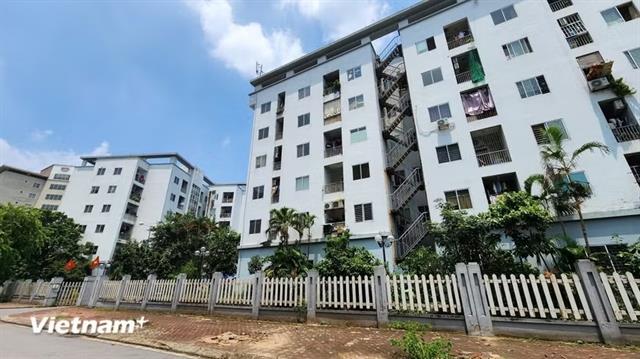
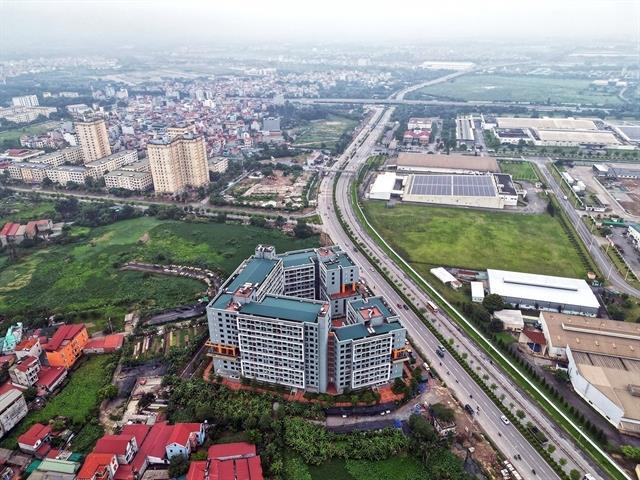

Hà Nội has allowed residents who already own homes to buy or lease-to-purchase social housing apartments if their current residence is more than 20km from their workplace.
The current robust development of digital technology, including artificial intelligence, has been providing Việt Nam''s economy with ample opportunities for growth, improved competitiveness, quality of products and services and production.
Economists said only 13 out of 101 middle-income countries in the 60s managed to break through the middle-income trap by the end of 2008, demonstrating the challenging nature of sustainable economic growth.
Việt Nam has ranked 44th out of 132 countries and economies in the Global Innovation Index (GII) and maintains its leading position out of the 34 lower-middle income economies.
The Japan Centre for Economic Research (JCER) has predicted that Viet Nam will become an upper-middle-income country in 2023, and its GDP will surpass that of China’s Taiwan in 2035.
Viet Nam must maintain its growth momentum in the next two decades in order to escape the middle-income trap by 2045 - a key objective set by the government''s development vision for 2030.
Prime Minister Nguyen Xuan Phuc put emphasis on the need for long-term solution to new drivers of growth and economic impetus to help the country escape the middle-income trap, especially as ageing population has already been underway.
Green buildings provide more benefits for investors in the long term than normal buildings and reduce the economic burden for low- and middle-income families.
The middle income trap is closely tied to economic growth, so if growth doesn’t stay high and for decades and there is not high income per capita, the nation will fall into the middle income trap
Supporting local tech firms as they strive for technological advancements is a vital part of Việt Nam’s efforts to beat the middle-income trap and become a developed economy, heard a forum on Thursday.
Though on its way to achieving all major economic goals, Viet Nam has its work cut out in maintaining an upward productivity growth lest it falls into the middle income trap and trails behind regional partners.
Viet Nam could reach upper-middle income status (US$22,000 purchasing
power parity per capita) by 2035 by growing with sustainability, equity
and social inclusion, and being a capable and accountable State, a World
Bank official has said.
Developers of low- and middle-income housing projects should pay
attention to green designs, intelligent technologies and energy saving
solutions, Do Duc Duy, deputy minister of construction has said.
Viet Nam could only escape the middle-income trap by developing the
manufacturing and industry sector to new products, the Viet Nam
Chamber of Commerce and Industry (VCCI) heard yesterday.
Viet Nam needs to shift from a low middle-income to higher-income
nation and avoid the middle-income trap by reforming policy content,
structure and organisation.